July is
Graves Disease Awareness
Month
Graves Thyroid Disease
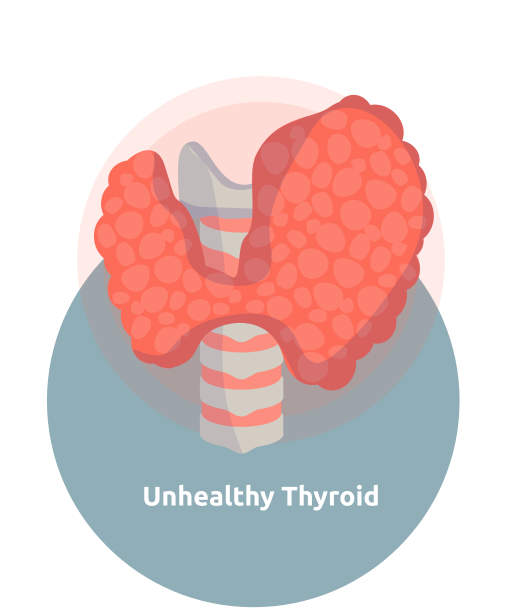
Graves disease is an autoimmune disorder that leads to an overactive thyroid gland (hyperthyroidism). It’s the most common cause of hyperthyroidism, a condition in which your thyroid gland makes too much thyroid hormone.
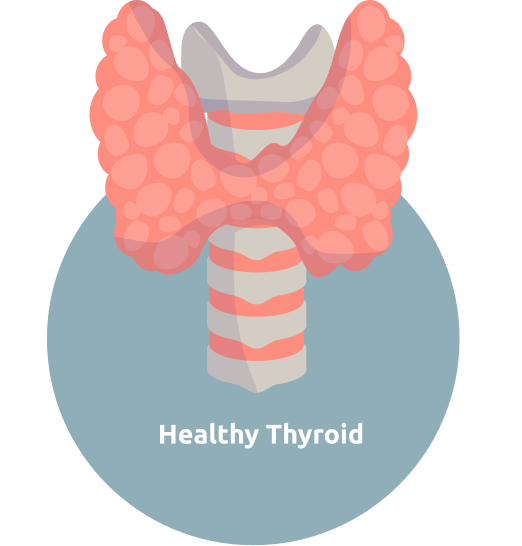
Your thyroid is a small, butterfly-shaped endocrine gland located at the front of your neck under your skin. Your thyroid’s main job is to regulate the speed of your metabolism (metabolic rate), which is the process of how your body transforms the food you consume into energy, by releasing certain hormones.
The condition gets its name from Robert Graves, an Irish doctor who first described the condition in the 1800s.
Inflamed Thyroid Gland
Graves disease is an autoimmune disorder that leads to an overactive thyroid gland (hyperthyroidism). It’s the most common cause of hyperthyroidism, a condition in which your thyroid gland makes too much thyroid hormone.
Your thyroid is a small, butterfly-shaped endocrine gland located at the front of your neck under your skin. Your thyroid’s main job is to regulate the speed of your metabolism (metabolic rate), which is the process of how your body transforms the food you consume into energy, by releasing certain hormones.
The condition gets its name from Robert Graves, an Irish doctor who first described the condition in the 1800s.
Common Signs & Symptoms
Fatigue & Tiredness
Feeling tired and weak is a hallmark of hypothyroidism. Many people with the condition report feeling exhausted, even after getting a good night’s sleep.
Weight Gain
Unexplained weight gain is another common symptom of hypothyroidism. Weight gain is not always a sign of a thyroid problem, but if you are gaining weight inexplicably, it may be a sign of an underactive thyroid.
Depression
Depression is a common symptom of hypothyroidism. The condition can cause changes in mood and energy levels, leading to feelings of sadness and hopelessness.
Fatigue
Feeling tired and weak is a hallmark of hypothyroidism. Many people with the condition report feeling exhausted, even after getting a good night’s sleep.